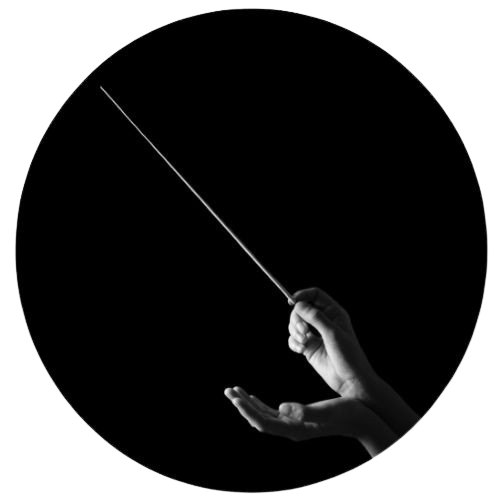
Ethel Mary Smyth was a composer, conductor, writer, and activist in the women’s suffrage movement in England. Raised during the Victorian era, she challenged societal norms that confined women to traditional roles and fought for her right to receive a musical education, present her works, and have them published.
From an early age, Smyth demonstrated exceptional talent. She became a skilled pianist at a young age and composed her first hymn at the age of ten. By twelve, she had made the firm decision to pursue a career in music.
She studied under renowned musicians such as Alexander Ewing, Carl Reinecke, and Heinrich von Herzogenberg. While training at the Leipzig Conservatory, she met influential figures like Dvořák, Grieg, and Tchaikovsky. Through Herzogenberg, she also established connections with Clara Schumann and Brahms.
Throughout her career, Smyth composed a wide range of works for orchestra, soloists, chamber ensembles, and choirs, including several operas that she conducted herself.
For two years, she set music aside to dedicate herself to the suffragist movement in England. In 1912, after being imprisoned for three weeks for participating in a protest, she organized a prison choir and conducted her own piece, March of the Women, using a toothbrush as a baton. Later, in 1930, she conducted the London Police Band during the unveiling of Emmeline Pankhurst’s statue.
Among her most notable compositions are Mass in D, the opera The Wreckers, Concerto for Violin, Horn, and Orchestra, The Boatswain’s Mate, and Fête Galante: A Dance Dream, among others.
007betgame, sounds kinda cool! Gave it a try, it’s functional. Remember to set a budget and stick to it! Check it out yourself: 007betgame
So, 13wim is around. Took a quick peek. Just a reminder: stick to a plan and don’t go nuts. More over here: 13wim
Checkin’ out 16betapp on my phone. Not bad! Remember always gamble responsibly. Get the app at: 16betapp
Recently signed into 39jlcomlogin because a friend recommended it. Login was easy, site is clean and works fine, and registration process was quick. Definitely recommended.
Anyone successfully logged into jl99login.com? Seems to be having some technical difficulties. Let me know if you’ve got any tips! Here is the link: jl99login
Heard some whispers about jljl777.net being a hidden gem. Gotta check it out and see if the rumors are true. Explore: jljl777
https://shorturl.fm/nZj4F
https://shorturl.fm/4FkMa
https://shorturl.fm/j2MtE
https://shorturl.fm/7XqMJ